Most bad haircuts aren’t bad barbering — they’re a translation problem. Here’s how to describe what you want so you walk out with it, every time.

“Just a trim.” “Short back and sides.” “Same as last time.” Every barber has heard these a thousand times, and every barber has learned that they mean something different to every person who says them. A “trim” to one client is a centimetre; to another it is half their hair. The good news: getting the haircut you actually want is not about knowing the jargon. It is about a few habits that take thirty seconds at the chair.
1. Bring a photo — the right kind
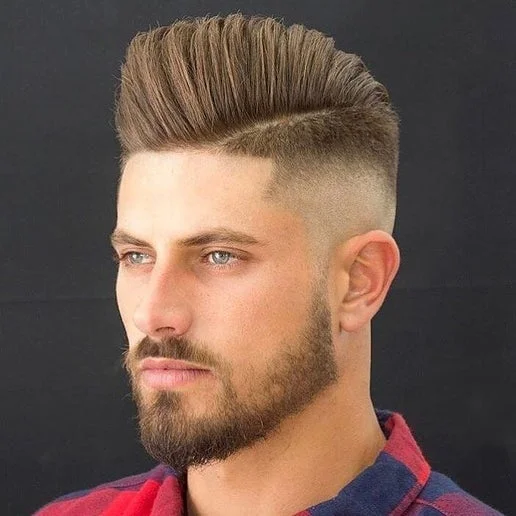
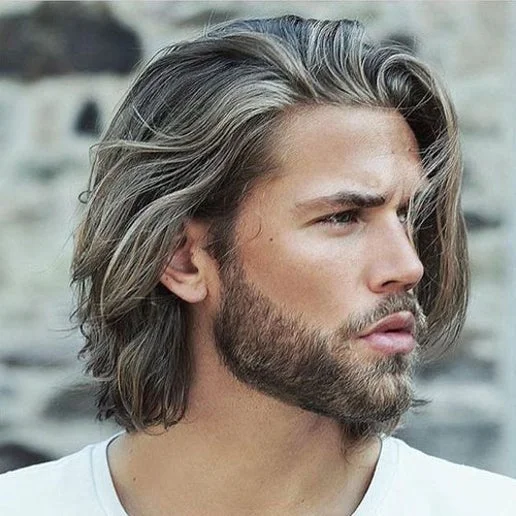
A photo is the single most useful thing you can bring to a barbershop. It removes the translation problem entirely. But not every photo helps:
- Pick someone with hair like yours. Same thickness, same texture, roughly the same hairline. A photo of a man with thick straight hair will not turn fine wavy hair into that — it sets both of you up to be disappointed.
- Bring two angles if you can: the side (shows the fade or taper) and the front (shows the top and fringe).
- Say what you like about it. “The sides, not the top” or “the length on top, but I want my sides shorter than that.” A photo is a starting point, not a contract.
- A photo of yourself after a haircut you loved is the best photo of all. Take one next time you walk out happy.
Save haircut photos to one album on your phone so you are not scrolling through three years of camera roll in the chair. Two or three good photos beat twenty.
2. Talk about the sides and the top separately
Almost every men’s haircut is two decisions: what happens on the sides and back, and what happens on top. Describe them one at a time and you cover 90% of what your barber needs to know.
The sides and back
The question is “how short, and how high does the short part go?”
- Taper — tidy and gradual around the ears and neckline; the sides keep most of their length.
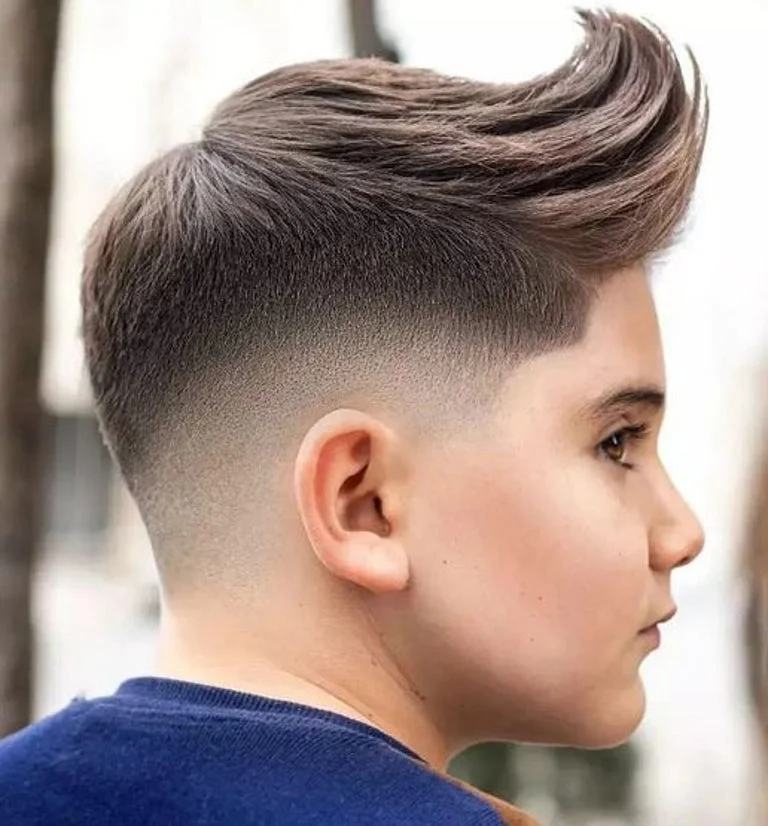
- Fade — blended from very short at the bottom to longer at the top. Say low, mid or high for where the blend starts.
- Skin fade — a fade that goes down to bare skin at the bottom.
- One length — “a number 2 all over the sides,” no blending.
Not sure which? Our guide to skin fade vs taper fade explains the difference with photos.
The top
The question is “how much length stays, and how should it sit?”
- Length: say it in fingers or inches — “about two inches,” “enough to push up,” “just take the ends off.”
- Texture: textured (choppy, piecey, moves), blunt (one clean length), or layered (softer, lighter).
- Direction: pushed forward, swept back, side part, up and messy.
- Fringe: keep it, shorten it, or blend it in.
3. Clipper numbers, explained
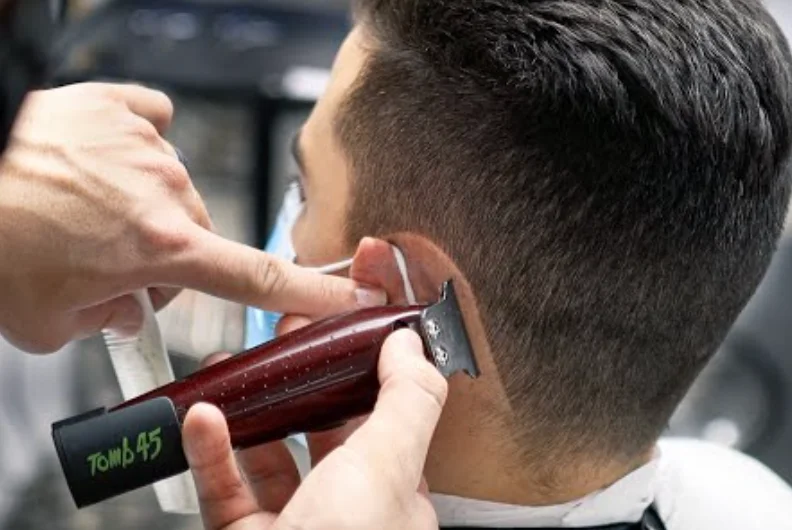
Clipper guards are numbered by length. Knowing three of them is plenty:
- Skin / 0 — no guard, down to the skin (a foil shaver or razor for a true skin finish).
- Number 1 — about 3 mm. Very short; stubble length.
- Number 2 — about 6 mm. The most common “short sides.”
- Number 3 — about 10 mm. Short but with some coverage.
- Number 4 — about 13 mm. Medium; the sides still lie flat but look full.
So “a 2 on the sides, faded to skin at the bottom, and leave the top” is a complete instruction. If you don’t know your number, tell the barber how the sides should look and feel — “short enough that it doesn’t puff out, but I don’t want to see scalp” — and they will pick it.
4. Say what you liked and didn’t like last time
This is the most underrated sentence in barbering. “The sides were perfect but the top ended up too short” tells the barber more than any style name, because it is specific to your head. If you are seeing the same barber, they will remember; if you are new to the shop, it is the fastest way to get them up to speed.
Same with “same as last time” — it only works if the barber cut it last time, and even then, say what you want kept and what you want changed. Hair grows, seasons change, and “the same” after six weeks is a different starting point than “the same” after three.
5. Tell us about your hair, not just the cut
A good barber will spot most of this, but saying it up front saves a wrong turn:
- Cowlicks and crowns — “my hair sticks up at the back no matter what.” The barber can leave weight there or cut with the growth pattern.
- Curl — “it looks straight when it’s wet but it curls up when it dries.” Curls need to be cut longer than they look.
- Thinning — if the top is thinning or the hairline is moving, say so. There are cuts that make it invisible and cuts that make it obvious, and a barber who knows can steer you to the right one.
- Thick or dense sides — “it puffs out after two weeks.” The fix is usually a shorter guard or more blending, not a shorter top.
6. Tell us about your mornings
The best haircut is the one you can actually do at 7am. Two questions your barber will ask if you don’t answer them first:
- How much time do you spend on it? “None” means a cut that falls into place — a crop, a buzz, a short taper. “Five minutes with product” opens up textured tops, quiffs and side parts.
- Do you use product, and which? Matte clay and paste hold texture; pomade gives shine and control; nothing at all suits shorter, self-sitting cuts. Say what you actually use, not what you plan to.
Add anything else that matters: helmets, hats, a job with a dress code, a wedding in two weeks, growing it out for winter. None of it is too small to mention.
7. Speak up during the cut
Barbers would much rather hear “a bit shorter on top” at minute twelve than see you leave unhappy at minute thirty. Two easy moments to check in:
- After the sides are done, before the top. The barber will usually pause here. Look in the mirror: is the fade the height you wanted? This is the moment to say “a little higher” or “that’s perfect.”
- When they show you the back. The hand mirror is not a formality. Check the neckline — rounded, squared or natural — and the blend behind the ears.
And if something isn’t right at the end, say it. Fixing a haircut while you are still in the chair takes two minutes. Fixing it a week later at home does not go well.
 Book onlineEvery Elite haircut starts with a consultationPick your shop, pick your barber, pick your time. Maple Ridge, Walnut Grove (Langley) and Willowbrook (Surrey), 8am–9pm daily.Book now →
The 30-second cheat sheet
Read this out at the chair and you are done:
“Here’s a photo of what I’m going for. Sides: [taper / low fade / mid skin fade], about a [2 / 3]. Top: keep about [two inches], [textured / blunt], I wear it [pushed up / to the side]. Last time the [top was too short / sides were perfect]. I use [clay / nothing] in the morning. And I’ve got a [cowlick at the back / curl when it dries].”
That is every question answered before it is asked. The rest — the fade, the blend, the finish — is what you are paying us for.
Ready to get the cut you actually want?
Bring the photo, use the cheat sheet, and let the barber do the rest. Walk-ins welcome; online booking is faster. Open 8:00am – 9:00pm, 7 days a week.
 Style & TrendsBest Haircuts for Teen Boys Right Now