Same haircut, three very different looks. Where the blend starts decides how sharp the cut reads, how often you will be back, and whether it suits your head shape.
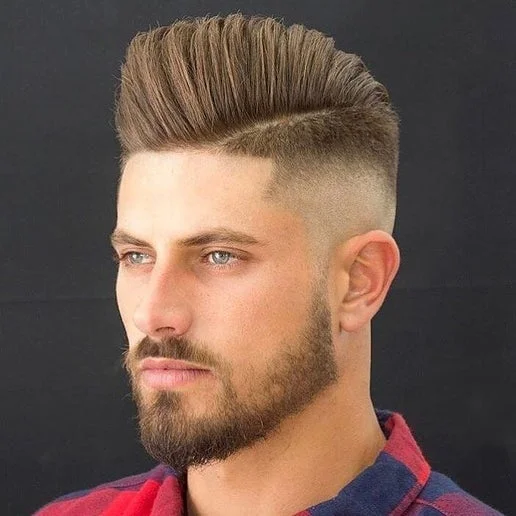
Low, mid and high are not three different haircuts. They are the same haircut started in three different places. Once you can see where the blend begins, you can ask for exactly the cut you want instead of hoping the photo on your phone comes out right. Here is what each one means, who it suits and what it costs you in upkeep.
What low, mid and high actually mean
A fade is hair that goes from very short at the bottom of the sides to longer as it climbs. The words low, mid and high describe where that blend starts — nothing else. The tools, the technique and the barber’s job are identical; only the starting height moves.
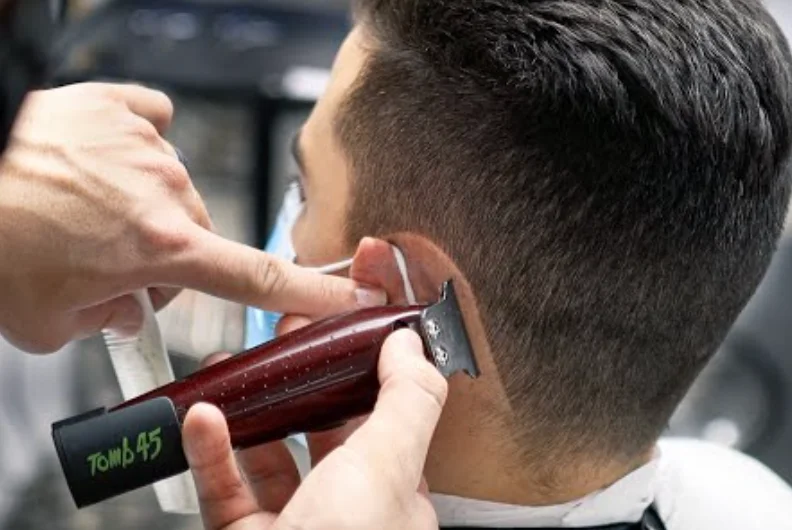
A simple way to picture it: draw an imaginary line around your head. Below that line the hair is faded down short. Above it, the length stays. Low puts the line just above the ear. Mid puts it around the temple. High puts it near the top corner of the head, where the side meets the top.
If you are describing it out loud and the words are not landing, point instead. Put a finger where you want the shortest hair to end and the longer hair to begin. Every barber understands that immediately.
The low fade
The blend starts just above the ear and follows the hairline around to the neck. Most of the side keeps its length, so from the front a low fade looks like a normal, tidy haircut — the sharpness is in the edges rather than the silhouette.
It is the safest of the three. It suits longer styles on top, side parts, classic gentleman’s cuts and anyone who does not want a haircut that announces itself. It is also the most forgiving as it grows: because so little hair was removed, a low fade still looks deliberate at week five.
Pick a low fade if
- You want clean edges without a big change in shape.
- Your workplace is on the conservative side.
- You are growing your hair out but want the neckline and ears kept sharp.
- Your hair is thinning on top — keeping the sides fuller keeps the proportions balanced.
The mid fade
The blend starts around the temple, roughly level with the top of the ear. This is the one most people have in mind when they say “a fade” without another word in front of it, and it is the most requested version in our three shops.
It works because it splits the difference: enough contrast to make the top look intentional, not so much that the cut takes over your face. It pairs with almost everything on top — a textured crop, a quiff, curls, a short pompadour, even a buzz.
Pick a mid fade if
- You want the cut to read as a fade in photos.
- You are not sure which to ask for — this is the sensible first try.
- Your hair is thick on the sides and puffs out as it grows.
- You like a defined shape on top and want it framed.
The high fade
The blend starts near the top of the sides, so most of the side of your head is very short and the length lives on top only. It is the boldest of the three and the most graphic — the one that gives you that hard separation between top and sides.
It is also the most demanding. A high fade shows the shape of your head, so it rewards an even, rounded skull and is less forgiving of flat spots. And because it removes the most hair, it changes the fastest: the look you leave with is at its best for about two weeks.
Pick a high fade if
- You want maximum contrast and a sharp, modern silhouette.
- You are happy coming in every two to three weeks.
- Your hair on top has real length or texture to show off.
- You already know your head shape suits short sides.
Side by side
- Where it starts: Low — just above the ear. Mid — at the temple. High — near the top corner of the side.
- How much hair comes off: Low — least. Mid — moderate. High — most.
- How loud it looks: Low — quiet. Mid — clearly a fade. High — the cut people notice first.
- Best window: Low — 4 to 5 weeks. Mid — 3 to 4 weeks. High — 2 to 3 weeks.
- Forgiving of head shape: Low — very. Mid — mostly. High — least.
- Price and time at Uppercuts: identical whichever height you choose. Skin Fade $32, about 30 minutes. Taper Fade $36, about 35 minutes. Kids 12 and under: Skin Fade $28, Taper Fade $29.
Related serviceElite Adult Haircut – Skin Fade$32 · about 30 min · high, mid or low — decided at the consultation. All three shops.See the service →
Head shape, hair type and your job
Head shape
The higher the fade, the more of your skull is on display. If the back of your head is flat or there is a pronounced occipital bone, a mid or low fade keeps more hair there and evens things out. A barber can see this in ten seconds — ask, and you will get an honest answer.
Hair type
Thick, dense or coarse hair benefits from a mid or high fade because the short sides stop the hair pushing outward as it grows. Fine or thinning hair usually looks fuller with a low fade, which keeps more hair around the sides.
Your week
Be honest about how often you will realistically sit in the chair. A high fade that has grown out for six weeks is no longer a high fade, and it loses the shape that made you want it. If a monthly visit is the most you will manage, a low or mid fade will look better on day 28.
You can move up gradually. Ask for a mid fade this time and tell your barber you are thinking of going higher next visit. They will note where they set the line so the next cut is a deliberate step, not a surprise.
Skin fade or clipper fade?
Height and depth are two separate decisions. Height is low, mid or high. Depth is how short the shortest part goes — down to bare skin with a foil shaver or razor (a skin fade, sometimes called a bald or zero fade), or down to a clipper guard like a number 0 or 1.
That means you can have a low skin fade or a high clipper fade, and every combination in between. Skin gives you the maximum contrast and the crispest photo; a clipper fade leaves a shadow of hair, grows out more gently and is a good middle step if you have never gone that short before.
If you are still deciding between a fade and something softer altogether, our guide to skin fade versus taper fade covers that choice in full.
What to say at the chair
- Low: “Low fade, starting just above the ear, blended into about a number 3 on the sides.”
- Mid: “Mid fade, starting around the temple — take it down to skin (or a number 1) at the bottom.”
- High: “High fade, start it up near the corner, and leave the top long enough to style.”
- Every time: say what you want left on top as a separate sentence. The fade and the top are two different decisions and barbers appreciate hearing both.
- Not sure? “Somewhere in the middle, and tell me what you think suits my head shape.” That is a perfectly good instruction.
Quick answers
Which fade is most popular?
The mid fade, by a distance. It photographs well, suits most head shapes and does not lock you into a two-week cycle.
Does a higher fade cost more?
No. At Uppercuts the price follows the service, not the height — a Skin Fade is $32 whether you take it low or high.
Can I go from a high fade back to a low one?
Yes, but it takes a visit or two. Going lower means waiting for the side to grow enough to blend into, so your barber may set it mid on the way down.
What about the back?
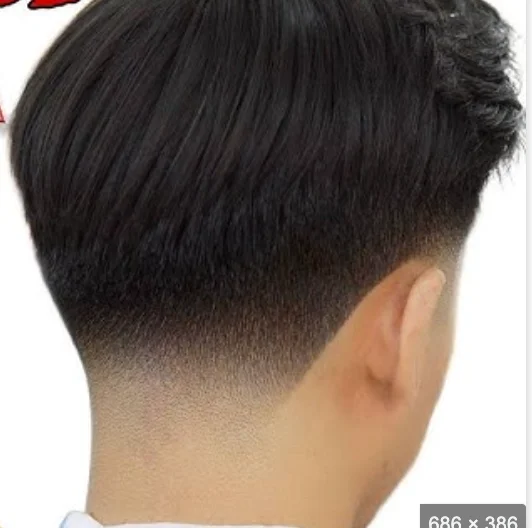
The fade wraps around the whole head, so the height applies to the back too. Ask for a rounded or a square neckline depending on how sharp you want the finish.
How do I keep it looking new?
Book a line-up ($15, 10–15 minutes) at the halfway point, and read our guide to keeping a haircut sharp between visits.
Not sure how high to go?
Every Elite haircut starts with a consultation. Tell your barber what you like, what you do for work and how often you can come in, and they will set the height for you. Open 8:00am – 9:00pm, 7 days a week in Maple Ridge, Walnut Grove and Willowbrook.
 Style & TrendsHow to Show Your Barber the Haircut You Want